

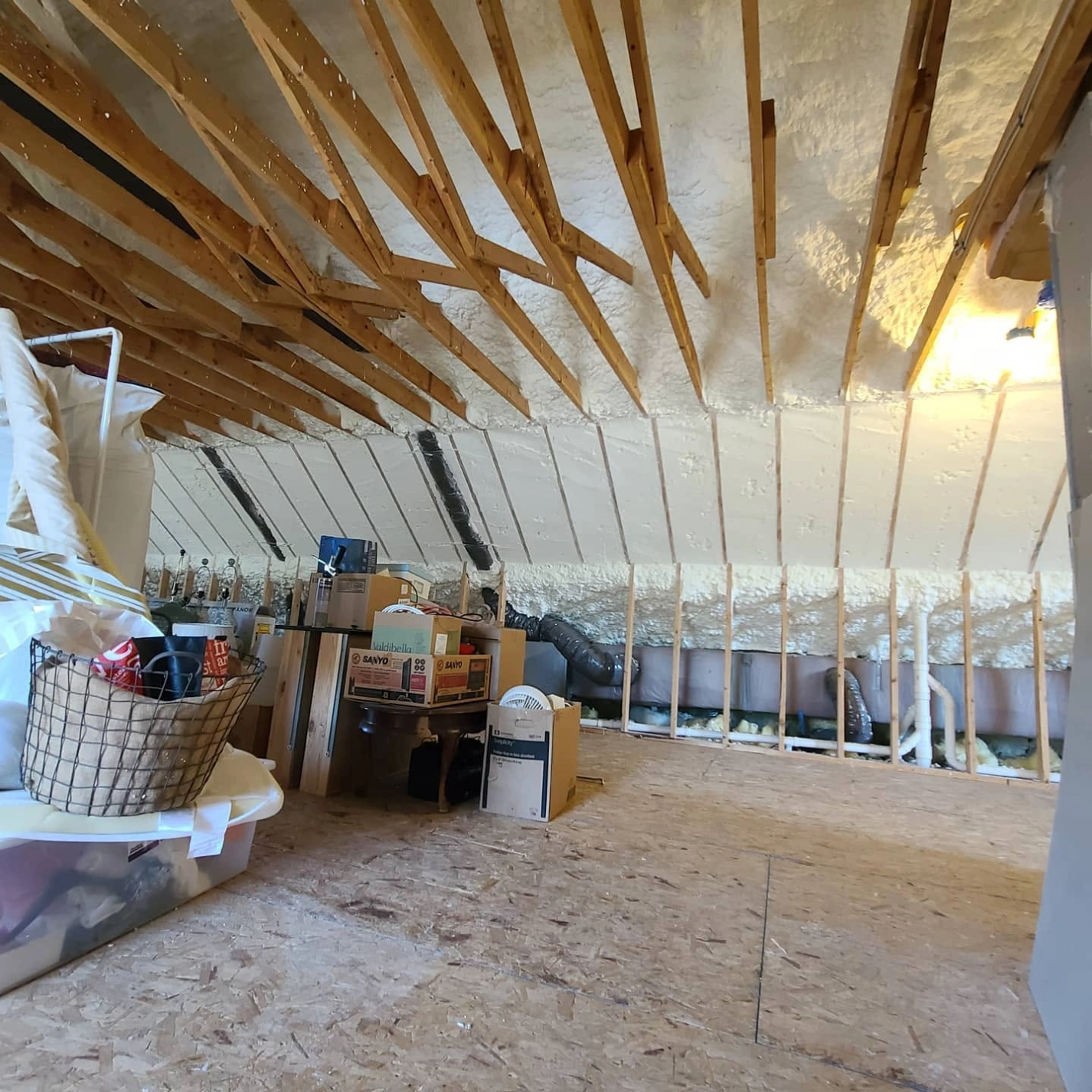
Spray foam insulation has become a go-to solution for homeowners in Medfield, MA because it addresses two problems at once: the high thermal resistance needed for a cold-climate building envelope and the air leakage that traditional insulation types often fail to stop. In a New England town where winters regularly push heating systems to their limit, the combination of a high per-inch R-value and an airtight seal sets spray foam insulation in Medfield, MA, apart from fiberglass batts, blown cellulose, and rigid board products. The right choice between open-cell and closed-cell formulations depends on the specific application, budget, and existing conditions of the home.
Medfield falls within the heating-dominated climate zone that covers much of southern New England. Homes here experience sustained cold temperatures from November through March, with routine overnight lows dropping well below freezing. The building envelope works overtime during these months, and any gap in insulation or air sealing translates directly into higher energy use. The Complete Guide to Spray Foam Insulation explains how proper insulation and air sealing can help address these energy-loss concerns and improve overall home comfort.
Building insulation reduces heat transfer through conduction, convection, and radiation. Spray foam excels because it tackles more than one of these mechanisms simultaneously. The foam expands on application and fills cavities completely, conforming to irregular surfaces, around plumbing penetrations, and behind electrical boxes where fiberglass batts leave voids.
According to ENERGY STAR, homes in climate zones 5 through 4C should target R-60 in uninsulated attics and R-49 in attics that already have 3 to 4 inches of existing insulation. Above-grade floors should reach R-30. Achieving these levels with a lower-R material requires substantially more thickness, which is not always practical in tight crawl spaces or shallow wall cavities.
The table below draws on published R-value data to compare insulation materials on a per-inch basis, which matters when cavity depth is limited.
| Insulation Material | R-Value per Inch (US Units) | Best Application | Air Sealing Capability |
|---|---|---|---|
| Closed-cell polyurethane spray foam | 5.5 to 6.5 | Walls, crawl spaces, rim joists, basements | Seals gaps and cracks on contact |
| Open-cell polyurethane spray foam | 3.6 | Walls, attics, sound-dampening partitions | Seals gaps; vapor-permeable |
| Fiberglass batts | 3.1 to 4.3 | Standard wall cavities, attics | Minimal; requires separate air barrier |
| Blown cellulose | 3.0 to 3.8 | Attics, retrofitted wall cavities | Settles over time; modest gap filling |
| Extruded polystyrene (XPS) | 3.6 to 5.4 | Exterior continuous insulation, foundations | Panel joints need taped sealing |
Closed-cell spray foam offers the highest R-value per inch among commonly available insulation materials, as documented in the R-value (insulation) reference table. For a 2×4 wall cavity with roughly 3.5 inches of depth, closed-cell spray foam insulation can deliver approximately R-19 to R-23 without any additional material. Fiberglass in the same cavity would max out around R-13 to R-15.
R-value measures thermal resistance under laboratory conditions, but real-world performance depends heavily on how well the building envelope prevents air movement. The Building insulation article notes that air infiltration can allow convective heat transfer or condensation formation, both of which degrade insulation performance. Batt insulation installed between wall studs may reduce conductive loss but does not eliminate heat losses due to air leakage through the building envelope.
Spray foam addresses this by expanding to fill gaps around framing members, pipe penetrations, electrical runs, and window rough openings. This dual function, insulation plus air barrier, is the primary reason it is specified in energy-conscious construction and retrofit projects.
Weatherization, the broader practice of protecting a building from the elements and reducing energy consumption, includes air sealing as a core procedure. The Weatherization article identifies sealing bypasses around doors, windows, pipes, and wiring as a standard measure. Spray foam serves as both the insulation and the sealing material in a single application step.
Many homes in Medfield, MA were built decades ago, during eras when insulation standards were lower and building practices prioritized speed over thermal performance. Common issues we encounter in these homes include:
In each of these scenarios, spray foam provides a solution that insulates and seals in one step. Rim joists, in particular, are difficult to insulate with rigid board or batts because of the irregular framing and multiple penetrations. Spray foam adheres directly to wood, concrete, and metal, filling the voids that other materials cannot reach.
Understanding the difference between the two spray foam types helps homeowners make informed decisions for specific areas of the home.
| Factor | Open-Cell Foam | Closed-Cell Foam |
|---|---|---|
| R-value per inch | ~3.6 | 5.5 to 6.5 |
| Cell structure | Broken cells, soft, flexible | Intact cells, rigid, dense |
| Vapor barrier | Vapor-permeable (allows moisture diffusion) | Acts as a vapor barrier when applied at sufficient thickness |
| Density | Low (~0.5 lb/ft³) | Higher (~2.0 lb/ft³) |
| Best uses | Interior walls, attics, sound control | Basements, crawl spaces, rim joists, exterior applications |
| Expansion | Expands significantly, fills cavities fully | Expands less, higher structural strength |
Open-cell foam works well in interior wall cavities and attics where vapor permeability is desirable and sound dampening is a secondary benefit. Closed-cell foam is the better choice for below-grade applications, crawl spaces, and any area where moisture resistance and structural rigidity are priorities.
The Federal Trade Commission governs how insulation products are marketed to consumers through the R-value Rule (16 CFR 460). This regulation requires manufacturers, professional installers, new home sellers, and retailers to provide specific R-value information based on standard test results. The rule exists because, without it, consumers would have no reliable way to compare the thermal performance of one insulation product against another.
When evaluating insulation options for a Medfield home, asking for the tested R-value of the specific product being installed, not just a generic category claim, is a practical step. The FTC has taken enforcement action against insulation marketers who exaggerated R-values or made misleading performance claims.
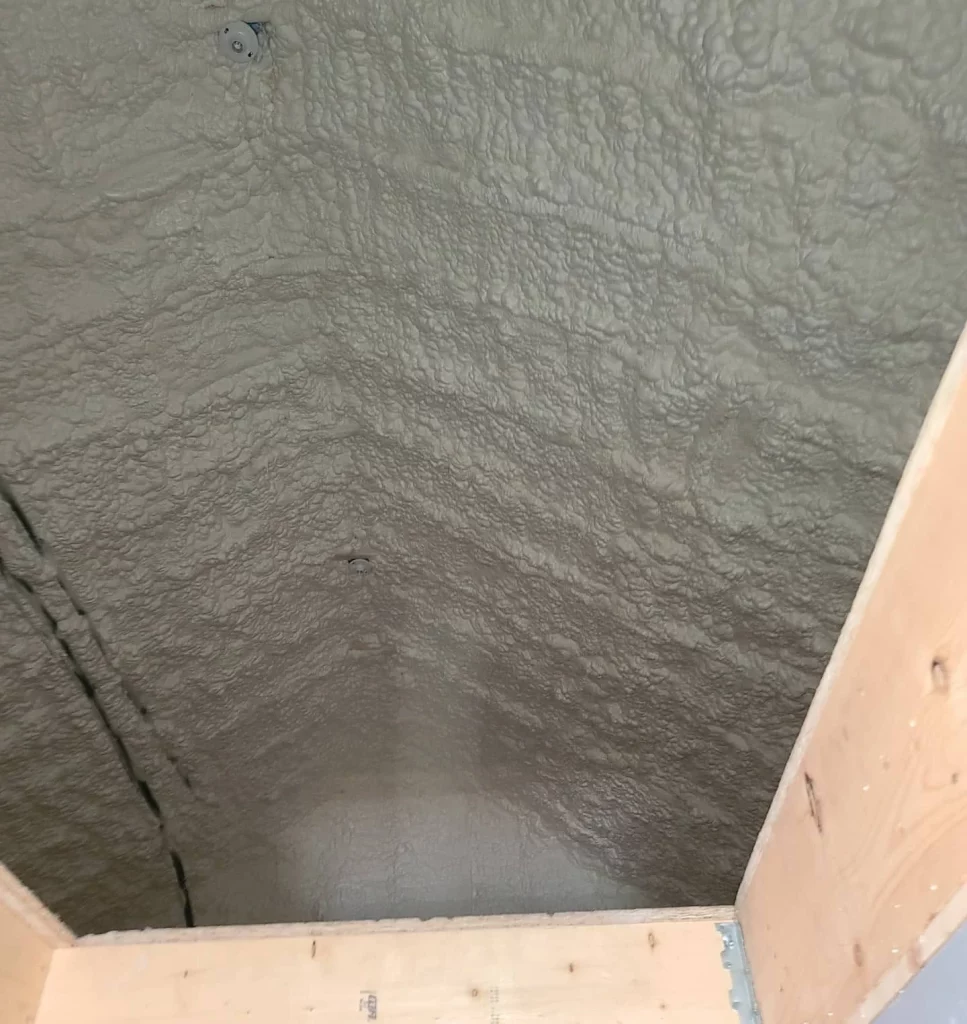
| Home Type in Medfield | Recommended Approach | Reasoning |
|---|---|---|
| Pre-1970 Colonial with unfinished attic | Closed-cell foam on attic floor and rafters; air seal penetrations | Attic is typically the largest source of heat loss; high R-value in limited depth matters |
| 1980s Split-Level with crawl space | Closed-cell foam on crawl space walls and rim joist | Moisture exposure and air infiltration through rim joist are primary concerns |
| Cape Cod with knee walls | Closed-cell foam behind knee walls and in attic floor adjacent to them | Knee wall assemblies are prone to air leakage and poorly insulated cavities |
| New Construction or Major Renovation | Closed-cell or open-cell in walls depending on vapor profile; continuous exterior insulation | Building envelope can be designed as an integrated system from the start |
Coleman Spray Foam provides spray foam insulation services to homeowners in Medfield, MA and the surrounding area. Our team evaluates your home’s specific conditions and recommends the right foam type and application for each area of the building envelope. Contact us at (781) 730-6537 or email [email protected] to discuss your project.
Request a Quote | Schedule an Insulation Assessment
Spray foam delivers a higher R-value per inch and simultaneously seals air leaks, whereas fiberglass only resists conductive heat transfer and requires a separate air barrier to perform effectively.
Closed-cell foam provides both insulation and a moisture-resistant air seal in crawl spaces, which are difficult to insulate effectively with batts or rigid boards due to irregular framing and penetrations.
Yes, the curing process involves off-gassing, and occupants should follow the installer’s re-occupancy guidelines. Once cured, the tightened envelope may require updated mechanical ventilation.
In some cases it can, depending on the condition and type of existing insulation. A qualified installer should evaluate whether the old material should be removed first.
When properly installed, spray foam insulation is a permanent building material that does not settle, sag, or degrade over the life of the structure.