

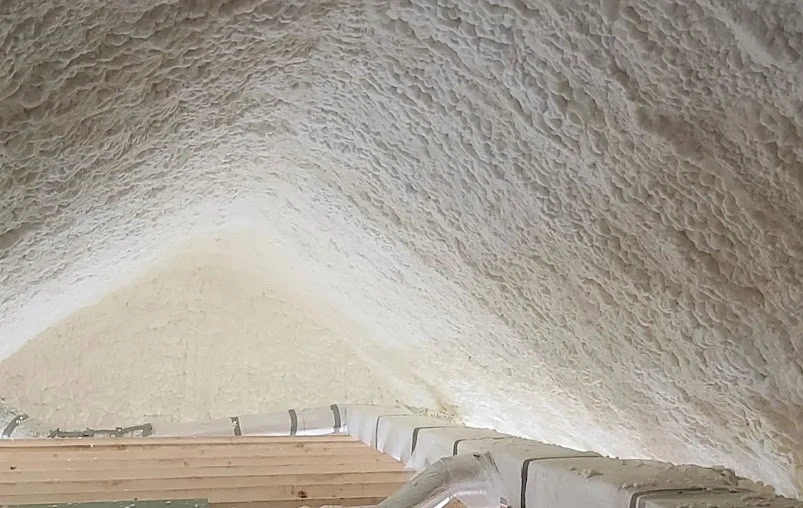
Spray foam insulation delivers measurable improvements to building performance by combining high thermal resistance with an airtight seal that traditional insulation materials simply cannot match. According to the U.S. Environmental Protection Agency, spray polyurethane foam (SPF) is a highly-effective and widely-used insulation and air sealant, making it a practical choice for builders, homeowners, and contractors who want to address both energy loss and structural durability in a single application. Whether you are planning new construction, a retrofit, or targeted upgrades to problem areas like attics and crawl spaces, the right spray foam strategy depends on your climate zone, building design, and performance goals. The two primary types, open-cell and closed-cell foam, each serve distinct purposes, and selecting the right one for the job determines the long-term return on your insulation investment.
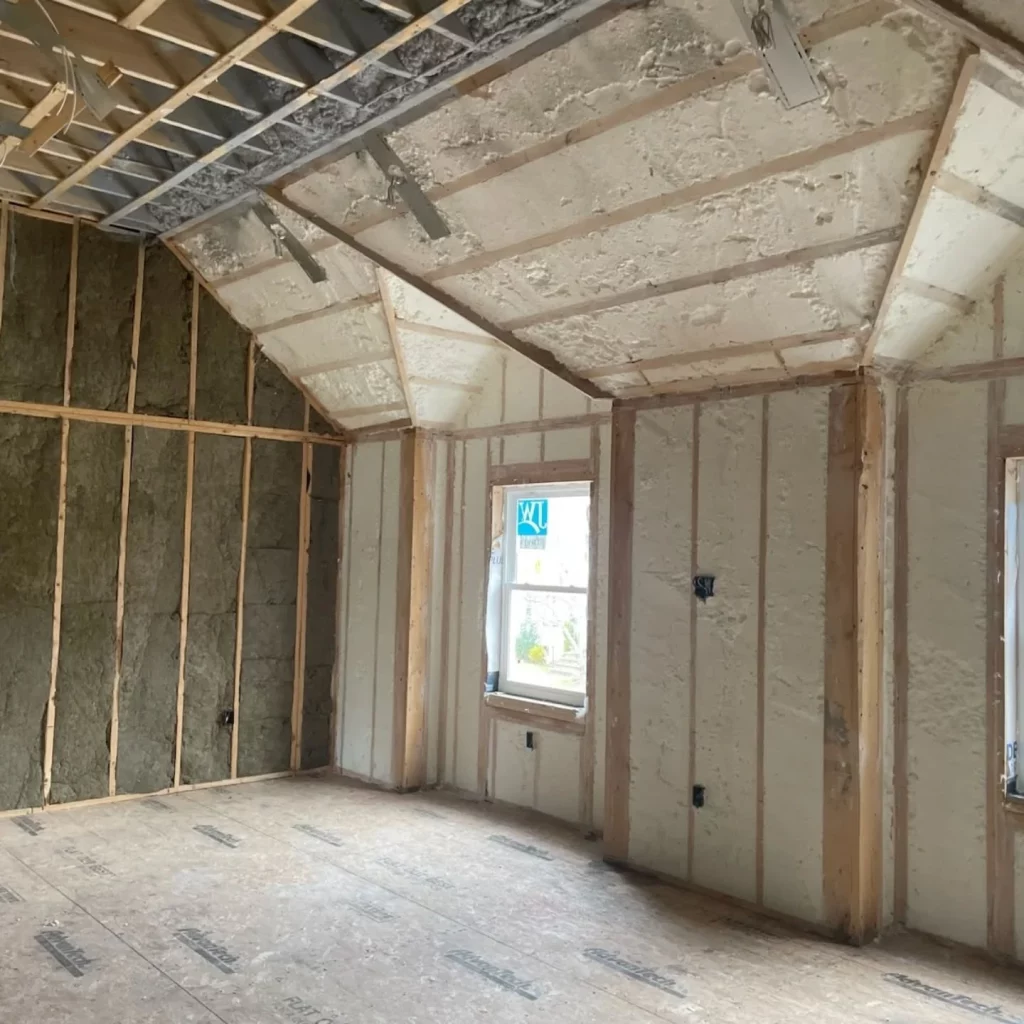
Most conventional insulation, such as fiberglass batts or blown cellulose, addresses only conduction, which is the transfer of heat through solid materials. A Guide to Spray Foam Insulation shows how spray foam tackles conduction, convection, and air leakage at the same time. When sprayed, the two chemical components, known as Side A (isocyanates) and Side B (polyols, catalysts, blowing agents, and flame retardants), react and expand to fill every gap, crack, and penetration in the building cavity. This expansion creates a monolithic layer that adheres to framing, sheathing, and substrates.
Traditional insulation leaves voids around framing members, electrical boxes, and plumbing penetrations. These gaps become pathways for air movement, which undermines the rated R-value of the insulation. As Wikipedia’s building insulation reference notes, thermal bridges at studs, joists, and other structural elements allow heat conduction to bypass insulation entirely. Spray foam eliminates many of these thermal bridges by fully encapsulating the framing and sealing adjacent air pathways.
Not all spray foam performs the same way. The EPA classifies SPF into three main categories based on density and application method. For most building insulation projects, the choice comes down to open-cell (low density, approximately half-pound) and closed-cell (medium density, approximately two-pound) foam.
| Property | Open-Cell Foam | Closed-Cell Foam |
|---|---|---|
| R-Value per Inch | ~3.5 | ~6.5 |
| Density | Low (half-pound) | Medium (two-pound) |
| Expansion | Aggressive, fills large cavities | Less aggressive, more controlled |
| Texture When Cured | Soft, flexible | Rigid, hard |
| Moisture Resistance | Permeable, allows vapor diffusion | Resists water and vapor intrusion |
| Structural Benefit | Minimal | Adds shear strength and rigidity |
| Best Applications | Wall cavities, attics, sound control | Basements, crawl spaces, exterior walls, roofs |
Open-cell foam expands more aggressively and cures to a soft, flexible material. It is a strong choice for interior wall cavities, attics, and ceilings where you need broad coverage at a lower material density. Because it remains permeable, it allows moisture vapor to pass through, which means it works well in assemblies where drying potential matters. It also provides meaningful sound attenuation, making it useful for interior partitions and media rooms.
Closed-cell foam delivers roughly double the R-value per inch and cures to a rigid, dense material. This rigidity gives it structural value. When applied to wall assemblies, it bonds framing members together and increases resistance to racking forces. Its low permeability means it acts as a vapor retarder and a moisture barrier, which is why it is the preferred choice for below-grade applications like basements and crawl spaces, as well as for exterior wall assemblies and roofing substrates where water intrusion is a concern.
The building envelope is the boundary between conditioned interior space and the exterior environment. Air leaks through that envelope represent one of the largest sources of energy waste in residential and commercial buildings. Spray foam directly addresses this problem by sealing gaps around windows, doors, plumbing penetrations, electrical runs, and framing connections. The Oak Ridge National Laboratory has demonstrated that sealing the building envelope with spray foam in attic spaces can significantly reduce energy loss, particularly in homes where HVAC ductwork runs through unconditioned attics. Their field tests confirm that unsealed attic ducts can waste substantial energy annually, and spray foam insulation applied at the roof deck can eliminate that loss pathway.
Moisture is one of the most damaging forces in any building. When warm, humid interior air penetrates wall cavities and meets cold exterior surfaces, condensation forms. Over time, that condensation leads to mold growth, wood rot, and structural degradation. Closed-cell spray foam acts as both an air barrier and a vapor retarder, preventing the moist air from reaching condensing surfaces. This dual function protects the structural integrity of framing, sheathing, and insulation layers over the life of the building.
Because closed-cell spray foam cures as a rigid material that adheres to substrates, it adds measurable strength to wall and roof assemblies. This adhesive quality ties framing members together, increasing the overall shear resistance of the wall system. In regions subject to high winds or seismic activity, this additional structural capacity can be a meaningful benefit beyond thermal performance.
Spray foam insulation is only as effective as its installation. The material is applied on-site through a chemical reaction that generates heat, vapors, and aerosols. The EPA emphasizes that SPF’s key ingredient, isocyanates, requires proper personal protective equipment, ventilation, and re-entry protocols during and after application. Some manufacturers recommend a minimum of 24 hours before re-occupancy without protective equipment.
NIST emission testing research has further shown that emissions from SPF can vary significantly depending on the foam type, specific chemical formulation, and temperature conditions. This means that professional installation by trained applicators who follow manufacturer guidelines, maintain proper ventilation, and understand re-entry requirements is not optional. It is essential for both safety and performance.
| Building Context | Recommended Foam Type | Key Reasoning |
|---|---|---|
| New construction, interior walls | Open-cell | Lower cost per inch, high expansion fills cavities completely |
| Basement or crawl space | Closed-cell | Moisture resistance, vapor barrier properties, structural rigidity |
| Attic with HVAC ductwork | Closed-cell (roof deck) | Seals envelope at rafters, prevents duct energy loss |
| Retrofit over existing insulation | Closed-cell | High R-value per inch compensates for limited cavity depth |
| Sound-sensitive partitions | Open-cell | Flexible foam absorbs sound transmission effectively |
| Metal buildings or pole barns | Closed-cell | Rigid foam adheres to metal, seals gaps, prevents condensation |
Coleman Spray Foam provides professional spray foam insulation services designed to improve energy efficiency, moisture control, and structural durability for residential and commercial buildings. Our experienced team evaluates each project individually and recommends the right foam type and application strategy for your specific building needs.
Request a Quote | Schedule a Building Assessment
Call us at (781) 730-6537 or email [email protected] to discuss your project. Let us help you build a tighter, more efficient structure that performs for decades.
Spray foam provides both insulation and air sealing in a single step, while fiberglass only addresses conduction and leaves gaps around framing and penetrations that allow air to pass through. Spray foam also maintains its rated R-value in real-world conditions because it fills cavities completely without settling or compressing.
When properly installed, spray foam insulation is a permanent building material that does not settle, degrade, or lose R-value over time. It adheres to substrates and maintains its structural and thermal properties for the life of the building.
Once fully cured, spray foam is an inert, stable material. The EPA notes that proper ventilation and re-entry time are critical during and immediately after application, with some manufacturers recommending 24 hours before building re-occupancy without protective equipment.
Yes, spray foam is effective for both new construction and retrofit applications. Closed-cell foam is especially useful in retrofits because its higher R-value per inch allows it to deliver strong thermal performance even in thin cavities where thicker insulation cannot fit.
Closed-cell spray foam acts as a vapor retarder and moisture barrier, preventing humid air from reaching condensing surfaces inside wall and ceiling assemblies. This helps prevent mold growth, wood rot, and other moisture-related damage in basements, crawl spaces, and exterior walls.