

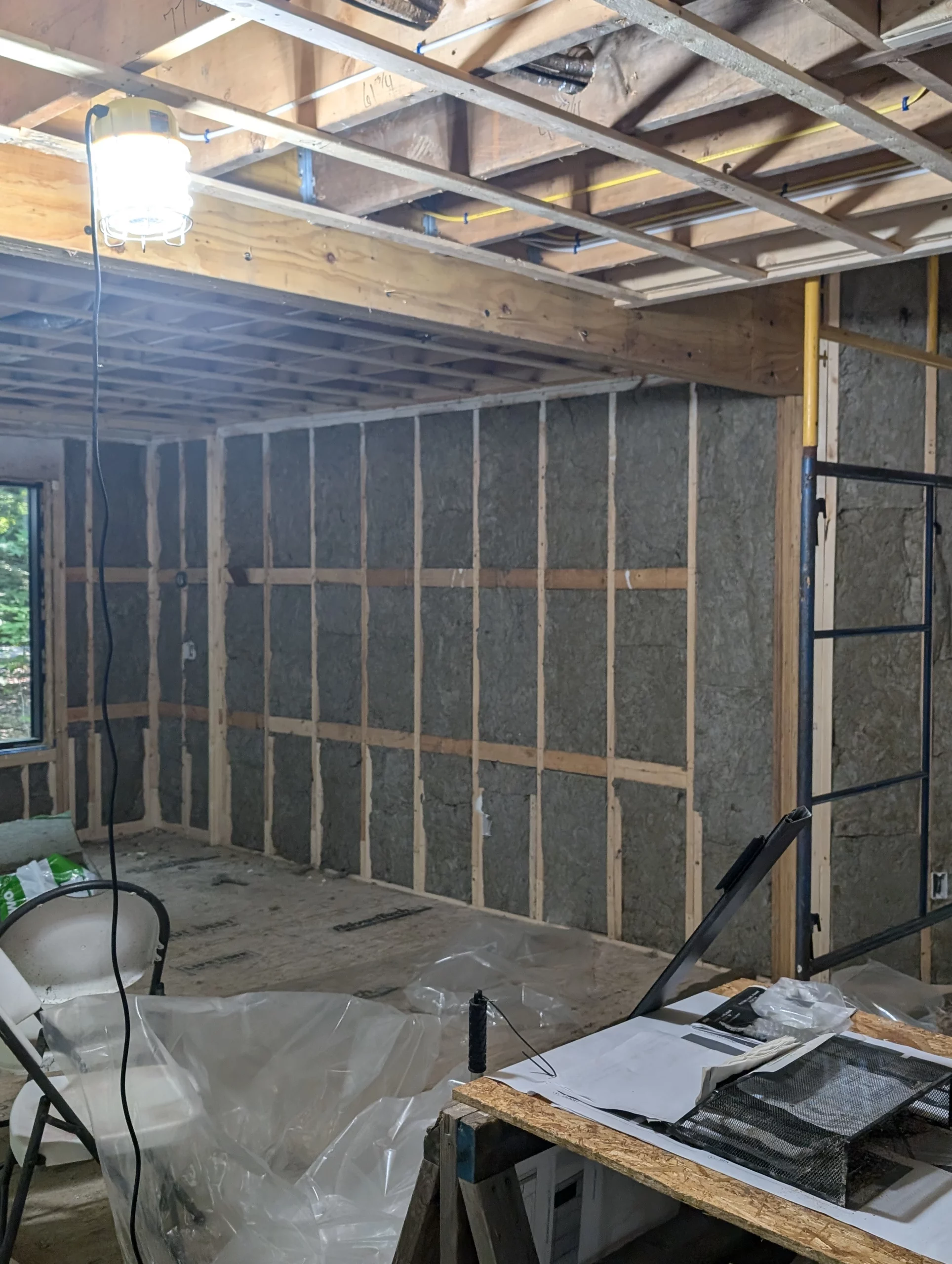
Modern Soundproofing address a problem that most Norwood, MA residents experience daily but rarely treat as a serious health concern: unwanted noise in the home. Between Norwood’s proximity to Route 1, the Commuter Rail corridor, and the steady hum of suburban activity, noise finds its way into living spaces through gaps, walls, and ceilings. The right soundproofing service approach depends on the noise source (outdoor traffic, shared walls, mechanical systems), the building construction, and the specific rooms involved. Solutions range from spray foam insulation that seals air leaks and absorbs airborne sound to complete wall assemblies designed to hit targeted Sound Transmission Class (STC) ratings. Understanding these options and how they apply to typical Norwood homes is the first step toward a quieter, healthier living environment.
Norwood sits at the intersection of several major noise sources. The Route 1 commercial corridor runs through the town, the MBTA Commuter Rail operates along the Norwood Central and South Norwood stations, and neighborhoods near the industrial parks on Allied Drive and Dean Street face sustained mechanical noise during business hours. Even residential streets deal with lawn equipment, HVAC systems, and the general activity of a town of nearly 30,000 people. This Guide to Soundproofing explains how the right soundproofing approach can help reduce these everyday noise disturbances and create quieter, more comfortable indoor spaces.
The EPA defines noise pollution as “unwanted or disturbing sound” that interferes with normal activities such as sleeping, conversation, or disrupts one’s quality of life. The agency has identified direct links between noise and health problems including stress-related illnesses, high blood pressure, speech interference, hearing loss, sleep disruption, and lost productivity. These are not abstract risks. They affect daily life in measurable ways: a household near the rail line loses sleep, a home office worker on a busy street struggles with concentration, and families in multi-story homes deal with sound transmission between floors.
Research published in Environmental Health Perspectives estimates that 104 million Americans had annual noise exposure levels high enough to risk noise-induced hearing loss, with tens of millions more at risk for heart disease and other health effects. The study identifies altering the built environment, including better building design and construction materials, as one of the most effective noise reduction strategies available to individuals.
When evaluating soundproofing solutions, the Sound Transmission Class (STC) rating is the standard measurement used in the United States. STC is an integer rating that describes how well a building partition, such as a wall, ceiling, floor, door, or window, attenuates airborne sound. Higher numbers indicate better sound isolation.
The following table shows what different STC levels mean in practice:
| STC Rating | What You Can Hear Through the Partition | Typical Application |
|---|---|---|
| 25 | Normal speech is easily understood | Thin drywall, no insulation |
| 30 | Loud speech can be understood | Standard interior wall |
| 35 | Loud speech is audible but not intelligible | Upgraded wall with insulation |
| 40 | Loud speech is audible as a murmur | Good residential partition |
| 45 | Loud speech is heard but barely audible | High-quality residential build |
| 50+ | Loud sounds are faintly heard or inaudible | Professional soundproofing target |
Two basic principles drive STC performance: adding mass and increasing overall thickness. A double wall with an air gap between two separate wall surfaces outperforms a single wall of the same total mass. Adding absorptive insulation, such as fiberglass or mineral wool, into wall cavities can increase the STC by 5 to 8 points. This is where modern insulation solutions, particularly spray foam, play an important role in residential soundproofing.
Spray foam insulation contributes to soundproofing solutions in two distinct ways. First, it creates an airtight seal by expanding to fill gaps, cracks, and penetrations that would otherwise serve as paths for airborne sound. Sound behaves like water in many respects: it finds and flows through even the smallest openings. A wall with an STC rating of 50 can be rendered nearly useless if there are unsealed electrical outlets, gaps around windows, or cracks in the framing.
Second, spray foam adds absorptive material inside the wall or ceiling cavity. Open-cell spray foam, with its semi-flexible, sponge-like structure, absorbs sound energy and dampens vibrations rather than transmitting them. This makes it particularly effective for mid-range frequencies typical of human speech, television audio, and general household noise. Closed-cell foam adds density and mass, which helps with lower-frequency sounds like traffic rumble and mechanical equipment.
For Norwood homeowners, spray foam is especially effective when applied in these areas:
The case for soundproofing extends well beyond comfort. Harvard Medical School researchers have demonstrated that transportation noise triggers heightened activity in the amygdala, the brain region involved in stress responses. This activation persists even when people believe they have habituated to the noise. The resulting stress pathways can lead to inflammation, cardiovascular disease, and metabolic disorders.
The American Public Health Association has formally recognized noise as a public health hazard, noting that chronic noise, even at moderate levels, causes sleep disruption, stress, and physiological responses that contribute to hypertension, cardiovascular disease, cerebrovascular disease, and metabolic disturbances. Children are among the most vulnerable, with noise exposure linked to elevated blood pressure, learning disruptions, and behavioral problems.
For families, soundproofing in Norwood, MA, is a preventive health investment. Reducing indoor noise levels below the EPA’s recommended 55 dBA day-night average can meaningfully lower stress hormone levels, improve sleep architecture, and support cognitive function for both adults and children.
Several misconceptions lead homeowners to underinvest in sound control or choose the wrong approach.
“Any insulation will soundproof a wall.” This is inaccurate. The type and placement of insulation matter. Fibrous cavity insulation like mineral wool improves STC by 5 to 8 points, while foam insulation provides both absorption and air sealing. Surface treatments like acoustic panels affect reverberation within a room but do not significantly improve the STC rating of the wall itself.
“Soundproofing means total silence.” The term “soundproofing” is considered a misnomer in architectural acoustics. No partition eliminates all sound. The goal is reducing sound transmission to a level where it no longer disturbs normal activities. An STC 50 wall will not eliminate a loud stereo next door, but it will reduce it to a level most people find acceptable.
“Egg cartons and foam panels on walls solve the problem.” These materials absorb sound reflections inside a room (improving acoustics for recording studios, for example) but do almost nothing to stop sound from passing through a wall or ceiling. Effective sound isolation requires treating the assembly itself, not just the surface.
“I only need to treat the loudest wall.” Sound finds the weakest path. Treating one wall while leaving windows, doors, electrical boxes, and ceiling/floor connections unaddressed will not deliver the expected results. A comprehensive approach that identifies and seals all flanking paths is necessary.
Different noise problems call for different solutions. The table below matches common Norwood noise scenarios with the most effective strategies:
| Noise Scenario | Recommended Approach | What It Addresses |
|---|---|---|
| Route 1 traffic noise | Spray foam in exterior walls, upgraded windows | Airborne sound through walls, flanking paths around windows |
| Commuter Rail proximity | Dense wall assemblies, mass-loaded vinyl, sealed penetrations | Low-frequency rumble, vibration through structure |
| Home office privacy | Interior wall insulation, acoustic sealant, solid-core doors | Speech privacy between rooms |
| Multi-floor household noise | Spray foam between floor joists, resilient underlayment | Impact noise (footsteps), airborne sound between floors |
| HVAC and mechanical noise | Spray foam around equipment, duct sealing, acoustic enclosures | Airborne noise from mechanical systems |
Evaluating a soundproofing contractor involves more than comparing quotes. Look for these indicators:
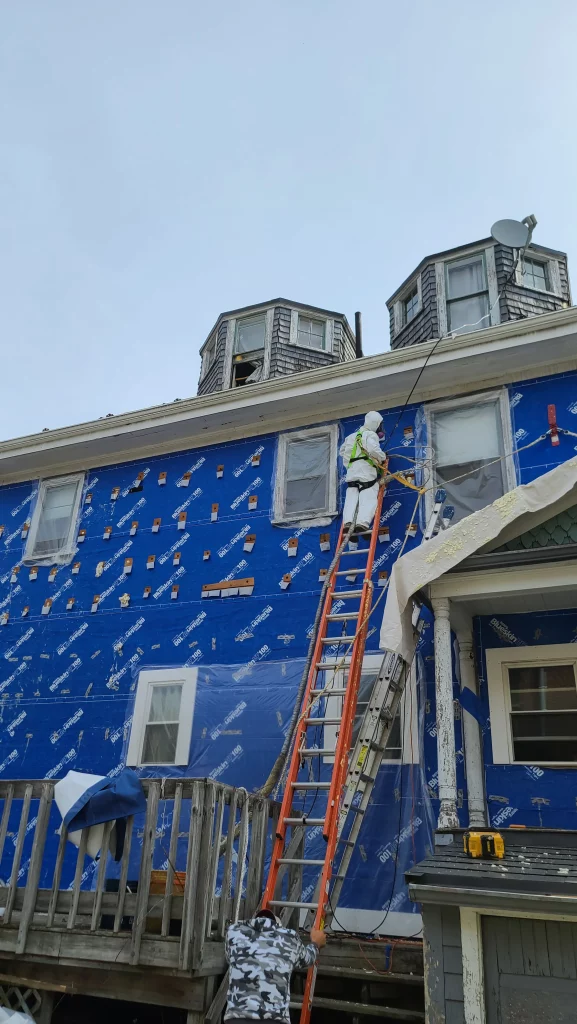
Coleman Spray Foam helps Norwood homeowners reduce noise intrusion and improve indoor comfort through professional spray foam insulation that seals air leaks and absorbs sound within wall and ceiling assemblies. Whether you are dealing with traffic noise near Route 1, rail noise from the Commuter Rail corridor, or sound transfer between rooms in a multi-story home, our team can assess your space and recommend the right approach. Reach out to us at [email protected] or call (781) 730-6537 to discuss your project.
Request a Quote | Schedule an On-Site Assessment
Spray foam seals air gaps that fiberglass cannot, which eliminates a major path for airborne sound. Open-cell spray foam also absorbs mid-frequency sound energy within the cavity, making it more effective than fiberglass for overall sound control when properly applied.
Yes. Spray foam that seals against noise also seals against air infiltration, which reduces heating and cooling loss. The same airtight barrier that blocks sound waves also blocks drafts, moisture, and outdoor air, delivering dual benefits from a single upgrade.
No material eliminates all low-frequency noise from rail operations. However, a properly insulated and sealed wall assembly can reduce it to a level that no longer disrupts sleep or conversation. The goal is meaningful reduction, not total elimination.
Most residential projects are completed in one to two days depending on the scope. A single room or targeted exterior wall can often be done in a single day, while whole-home applications may require additional time.
Older homes often have more gaps, cracks, and uninsulated cavities, which makes them particularly receptive to spray foam. Sealing these vulnerabilities typically produces noticeable improvements in both noise reduction and energy efficiency.