

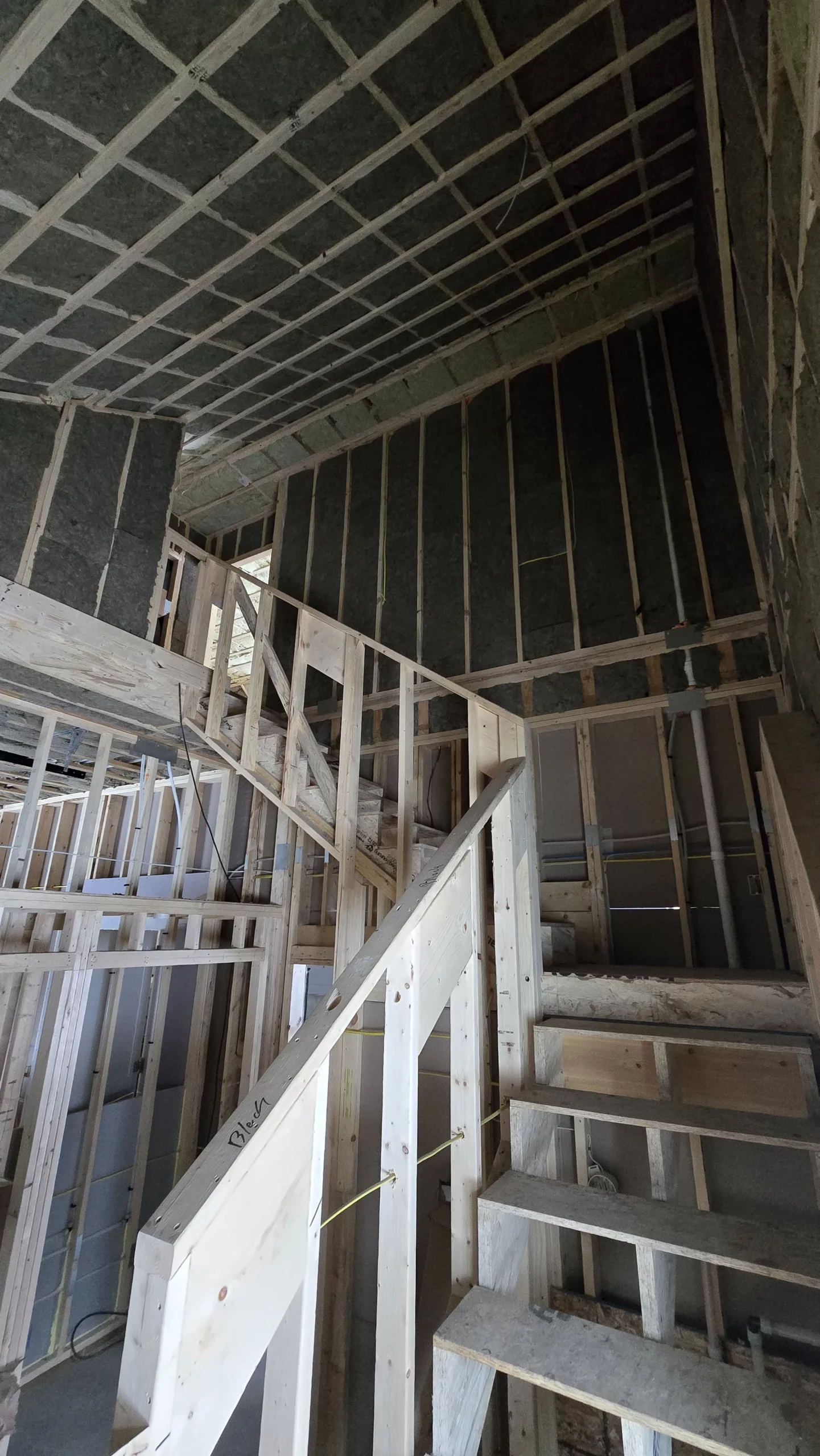
Noise is invisible, but its effects are anything but. The EPA identified that a 24-hour exposure level of 70 decibels is the maximum safe threshold to prevent measurable hearing loss over a lifetime, while levels of 55 dB outdoors and 45 dB indoors are needed to prevent activity interference and annoyance. The problem is that an estimated 104 million Americans are exposed to annual average noise levels exceeding that 70 dB limit. Research published in Environmental Health Perspectives estimates that these individuals are at risk of noise-induced hearing loss, heart disease, and other serious health effects.
For most of us, the noise problem hits closest to home. Traffic on a nearby road, a shared wall in a condo, the hum of an HVAC system, or the rumble of a garbage truck at 5 a.m. These everyday sounds chip away at sleep quality, focus, and overall well-being. Soundproofing, when done right, is one of the most impactful investments you can make in your living or working space.
This guide draws on years of hands-on experience working with insulation and sound control in residential and commercial properties. We are going to walk you through every major aspect of soundproofing, from the physics of how sound travels to the materials that actually work, the methods that hold up over time, and the costs involved. By the end, you will have the knowledge to make informed decisions about your own soundproofing project, whether you are dealing with a noisy neighbor, a home theater, or a recording studio.
Most people think of soundproofing services as a comfort upgrade, something nice to have but not essential. The research tells a very different story. Chronic noise exposure is a public health issue. The EPA has linked noise pollution directly to stress-related illnesses, high blood pressure, speech interference, hearing loss, sleep disruption, and lost productivity. These are not edge cases. They are widespread consequences of living in environments where noise levels consistently exceed what our bodies can handle.
The pathway from noise to health damage is biological. When you are exposed to persistent noise, your cardiovascular system does not adapt the way your conscious mind does. Your body triggers a “fight or flight” response, releasing stress hormones and raising blood pressure even during sleep. Over months and years, this constant physiological activation contributes to atherosclerosis and heart disease. Children in noisy environments show decreased learning, lower reading comprehension, and concentration deficits.
Environmental Health Perspectives published a study estimating that 104 million Americans had annual average noise exposure levels above 70 dB. Tens of millions more may be at risk of cardiovascular effects. A study by University of Michigan professor Richard Neitzel and colleagues found that a 5 dB reduction in environmental noise would reduce the incidence of high blood pressure by 1.4% and coronary heart disease by 1.8% in the U.S., yielding an estimated annual economic benefit of $3.9 billion. That finding was reported by NPR in their coverage of the growing push for noise regulation.
Soundproofing your home or workspace is not a luxury. It is a protective measure for your hearing, your cardiovascular health, and your mental clarity. Understanding how sound works is the first step toward controlling it.
Before you can stop a sound, you need to understand how it moves. Sound is a pressure wave that travels through air, but it also travels through solid materials and through any connection between two spaces. This distinction between airborne and structure-borne sound is one of the most important concepts in soundproofing, and it is where most DIY attempts go wrong.
Airborne sound is what you hear from someone talking in the next room, a television playing down the hall, or traffic outside your window. It travels through the air and enters your space through any available path: gaps around doors, thin drywall, unsealed electrical outlets, and even the smallest cracks. Structure-borne sound, sometimes called impact noise, travels through solid materials. Footsteps on the floor above you, a washing machine vibrating against a wall, or a door slamming are all examples. Structure-borne sound bypasses air entirely and uses the building’s framing as a highway.
There are four mechanisms for controlling sound transmission:
1. Mass
The heavier and denser a material is, the harder it is for sound waves to move it. In acoustics, this is called the mass law: every time you double the mass of a barrier, you gain roughly 6 dB of sound reduction. This is why a concrete wall blocks more noise than a sheet of plywood of the same thickness. Adding a second layer of drywall to a wall is one of the simplest and most effective soundproofing upgrades you can make.
2. Decoupling
Decoupling means creating a physical break between two surfaces so that vibration cannot travel from one to the other. If a sound wave hits your wall and the drywall is directly screwed to the studs, those studs carry the vibration straight through to the other side. If instead you mount the drywall on resilient channels, which are metal rails with a rubberized strip, the vibration has to pass through that flexible layer first, which absorbs much of the energy before it reaches the framing.
3. Absorption
Absorption refers to materials inside a wall cavity or on a surface that convert sound energy into heat. Fibrous materials like fiberglass, mineral wool, and open-cell spray foam are absorbers. They do not block sound on their own, but they reduce the amount of sound that builds up inside a cavity and bounces back out. Think of absorption as reducing the echo inside a wall, while mass and decoupling stop the sound from getting through in the first place.
4. Damping
Damping compounds, often applied between two rigid layers like drywall, convert vibrational energy into a small amount of heat. Green glue is a well-known example. When sandwiched between two layers of drywall, the compound remains viscous and resists the shear forces created by sound vibrations, effectively turning that vibrational energy into heat rather than transmitting it through the wall.
The best soundproofing assemblies use all four mechanisms in combination. Mass to block, decoupling to break the path, absorption to reduce cavity resonance, and damping to dissipate vibrational energy.
Soundproofing materials and assemblies are rated using standardized measurements. The two ratings you will encounter most often are the Sound Transmission Class (STC) and the Noise Reduction Coefficient (NRC). Understanding what these numbers mean will help you evaluate products and assemblies with confidence rather than relying on marketing claims.
STC measures how well a building assembly, such as a wall, floor, or ceiling, blocks airborne sound. The rating is derived from laboratory testing across a range of frequencies from 125 Hz to 4000 Hz. Higher STC numbers indicate better sound isolation. Here is a practical reference for what different STC ratings mean in everyday terms:
| STC Rating | What You Can Expect to Hear |
|---|---|
| 25 | Normal speech is easily understood through the assembly |
| 30 | Loud speech is understood, normal speech is audible but not intelligible |
| 35 | Loud speech is audible but not intelligible |
| 42 | Loud speech is barely audible, normal speech is not heard |
| 50 | Very loud sounds (shouting, music) are barely audible |
| 60+ | Most sounds are not audible; suitable for recording studios |
A standard interior wall with a single layer of 1/2-inch drywall on each side and no insulation typically rates around STC 33. Adding insulation to the cavity brings it to roughly STC 38. Using double drywall with green glue and resilient channel can push a wall assembly to STC 50 or higher. The difference between STC 33 and STC 55 is dramatic in practice. At STC 33, you can clearly understand a conversation happening on the other side of the wall. At STC 55, you would barely hear loud shouting.
One important limitation of STC is that it does not account well for low-frequency sound, which is where a lot of problematic noise lives. Bass from a home theater, the rumble of traffic, or the thud of footsteps are all dominated by frequencies below 125 Hz. For these situations, some acousticians prefer to look at the Transmission Loss at specific low frequencies rather than relying on the single STC number.
NRC measures how well a material absorbs sound that hits its surface. The rating is expressed as a number between 0 and 1, representing the average percentage of sound energy absorbed across four mid-range frequencies: 250 Hz, 500 Hz, 1000 Hz, and 2000 Hz. An NRC of 0.00 means the material reflects all sound. An NRC of 1.00 means it absorbs all sound energy that reaches it (a practical “black hole” for sound at those frequencies).
NRC is most relevant when you are trying to reduce echo, reverberation, and overall noise levels within a room. It is not a measure of how well a material blocks sound from passing through a wall or ceiling. This is a common point of confusion. A material can have a high NRC, meaning it absorbs sound well inside a room, while offering almost no sound blocking ability. Acoustic foam panels are a good example: they absorb mid and high frequencies effectively, but they are too light and thin to stop sound from traveling through a wall.
The practical takeaway is this: STC tells you how much sound is blocked, NRC tells you how much sound is absorbed. For soundproofing a wall between you and a noisy neighbor, STC is the rating that matters most. For making a conference room less echoey, NRC is your primary concern.
Key Takeaways: Sound Ratings
STC measures how well a wall, floor, or ceiling blocks airborne sound. Higher is better. A standard wall is around STC 33. Well-built soundproof assemblies reach STC 50-60 or more. NRC measures how much sound a material absorbs. It is relevant for room acoustics, not for blocking sound between rooms. Both ratings matter, but they serve different purposes.
Choosing the right materials is where soundproofing projects succeed or fail. Every material has specific strengths and limitations, and using the wrong one for the job is a common and expensive mistake. Below is a thorough breakdown of the materials that actually work, organized by function.
These materials go inside wall, floor, and ceiling cavities. Their primary role is absorption, reducing resonance within the cavity and slightly increasing the overall STC of the assembly.
Mineral Wool (Rock Wool / Stone Wool)
Mineral wool is made from basalt rock or slag that is spun into fibers. It is dense, typically 4-8 pounds per cubic foot, fire-resistant, and retains its shape over decades without sagging. Soundproofing create quieter indoor spaces by reducing unwanted noise and improving acoustic comfort. Mineral wool batts are widely considered the best all-around cavity insulation for soundproofing. Their density gives them a modest advantage over fiberglass in sound blocking, with cavity installations typically contributing an STC improvement of 2-5 points depending on the assembly.Mineral wool is also naturally moisture-resistant and does not promote mold growth. We have found that mineral wool performs consistently well in real-world installations, particularly in walls and ceilings where cavity depth is limited and you need maximum density per inch.
Fiberglass Insulation
Fiberglass is the most widely available and affordable cavity insulation. Standard fiberglass batts rated for acoustical use have densities around 2-4 pounds per cubic foot. They provide meaningful absorption within a cavity but are less dense than mineral wool, so they contribute slightly less to STC. For budget-conscious projects where every dollar matters, fiberglass is a perfectly reasonable choice, especially if the savings are redirected to other soundproofing elements like a second layer of drywall or acoustic caulk.
Cellulose Insulation
Cellulose is made from recycled paper treated with fire retardants. It is typically blown into wall cavities, making it a good option for retrofit projects where you do not want to open up finished walls. Its density is comparable to mineral wool when densely packed, and it fills gaps and voids more completely than batts, which helps seal air leaks. Cellulose is a strong choice for existing walls where you can access the cavity from the top or through small openings.
Open-Cell Spray Foam
Open-cell spray foam expands to fill cavities completely, sealing every gap and crack. This makes it an excellent air seal, which matters because air leaks are one of the most common paths for sound transmission. Open-cell foam has an NRC of approximately 0.70 to 0.75, meaning it absorbs about 70-75% of sound energy that reaches it. However, open-cell foam is low in mass, so it does not add meaningful STC on its own. Its real value in soundproofing is as an airtight sealant and absorber within a cavity. When combined with dense exterior sheathing or multiple layers of drywall, it contributes to a high-performing assembly.
Closed-Cell Spray Foam
Closed-cell spray foam is denser and more rigid than open-cell. It provides a higher R-value per inch and offers some moisture barrier properties. For soundproofing, closed-cell foam is less absorptive than open-cell (lower NRC) but adds more mass per inch of thickness. It is useful in situations where you need both thermal insulation and some sound blocking in a thin cavity, such as a floor assembly or a retrofit behind existing drywall. Its primary acoustic advantage over open-cell is the additional mass and the more complete structural seal.
Expert Tip: The single most cost-effective soundproofing upgrade for an existing wall is often to add a second layer of 5/8-inch drywall with damping compound between the layers. This adds mass and damping without the need to open the wall cavity. If you are opening the wall anyway, fill the cavity with mineral wool and add resilient channel plus the doubled drywall. That combination takes a standard STC 33 wall to STC 50+.
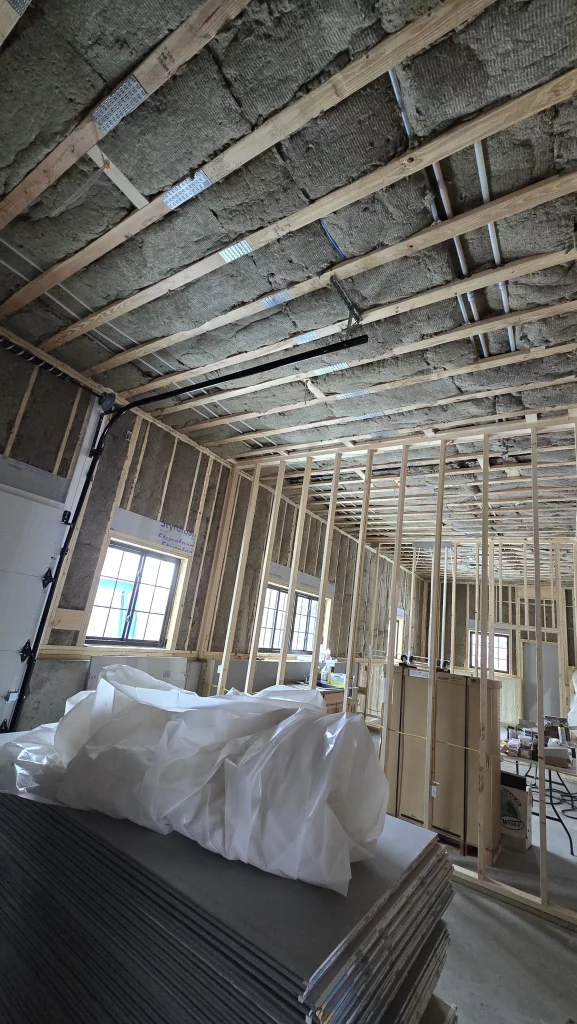
These materials are specifically designed to add mass, damping, or decoupling to a building assembly.
Mass Loaded Vinyl (MLV)
Mass loaded vinyl is a heavy, flexible sheet material loaded with barium sulfate or other dense minerals. It typically weighs 1 pound per square foot or more. MLV is used as a barrier layer within a wall, ceiling, or floor assembly to add mass without adding significant thickness. A 1 lb/sq ft MLV sheet adds roughly 6-7 STC points when properly installed between layers. It is flexible, which means it can conform to irregular surfaces, and it is effective at blocking airborne sound across a broad frequency range. MLV is most useful in thin assemblies where you cannot add layers of rigid material, such as upgrading an existing wall from one side only.
Acoustic Caulk and Sealant
Acoustic caulk, also known as acoustical sealant, is a non-hardening, permanently flexible sealant used to close gaps and joints in soundproofing assemblies. This is one of the most important and most overlooked materials in any soundproofing project. Even a 1% gap in a wall’s surface area can reduce its effective STC by up to 10 points. Every seam between drywall sheets, every gap around electrical boxes, every perimeter joint where the wall meets the floor and ceiling should be sealed with acoustic caulk. Standard latex or silicone caulk dries hard and can crack over time, reopening sound paths. Acoustic caulk remains flexible for decades.
Resilient Channel and Sound Isolation Clips
Resilient channels (often called RC-1 or RC-2) consist of thin metal channels with a resilient, rubber-like strip on one side. The drywall is attached to the resilient channel rather than directly to the studs or joists. This decouples the drywall from the framing, breaking the direct path for structure-borne vibration. Sound isolation clips work on the same principle but use rubber pucks mounted to the framing with a hat channel clipped to the pucks. Clips generally outperform resilient channels because the rubber decoupling is more effective than the metal strip on the resilient channel.
Damping Compounds (Green Glue and Similar Products)
Damping compounds are viscous, non-drying materials applied between two rigid layers, most commonly between two sheets of drywall. When sound hits the assembly, it causes the two layers to shear slightly against each other, and the damping compound converts that shearing energy into heat. In lab tests, adding a damping compound between two layers of 5/8-inch drywall can improve STC by 5-8 points compared to the same two layers without compound. Damping compounds are easy to use: you apply them in a random pattern to the back of one drywall sheet, then sandwich it against the second sheet with screws.
These materials are used inside a room to control sound reflections and reverberation. They are not soundproofing materials in the traditional sense, but they play an important role in overall acoustic quality.
Acoustic Panels
Acoustic panels are framed panels filled with fiberglass or mineral wool and wrapped in acoustically transparent fabric. They typically have NRC ratings of 0.80 to 1.00 depending on thickness and density. Mounted on walls or ceilings, they absorb mid and high frequency reflections, reducing echo and improving speech clarity. They are widely used in offices, restaurants, recording studios, and home theaters.
Bass Traps
Bass traps are specialized acoustic absorbers designed to target low-frequency sound that standard panels cannot absorb. They are typically placed in room corners where low frequencies build up. Bass traps are essential in rooms used for music listening, recording, or mixing, where uncontrolled bass buildup causes muddy, inaccurate sound.
Key Takeaways: Soundproofing Materials
No single material solves every noise problem. The best results come from combining materials that address different aspects of sound control. Use mass (MLV, double drywall), decoupling (resilient channel or clips), absorption (mineral wool or fiberglass in cavities), and damping (green glue) together. And never skip the acoustic caulk: sealing every gap is one of the cheapest and most effective steps you can take.
The materials you choose matter, but how you put them together matters just as much. Below are the most effective construction methods for each part of a building, based on field-tested assemblies that deliver real-world results.
A standard interior wall (single layer of 1/2-inch drywall on each side, wood studs, no insulation) has an STC of about 33. This is enough to hear muffled conversation but not enough for privacy. Here is how you improve it, in order of effectiveness:
Basic Upgrade (STC 38-42):
Moderate Upgrade (STC 45-50):
High-Performance Upgrade (STC 52-58):
Expert Tip: Staggered-stud walls are one of the most cost-effective ways to get serious sound isolation without the complexity of a fully double-stud wall. The key is making sure no single stud bridges both sides. Even a single bridged stud can create a flanking path that significantly reduces performance. Also, keep electrical boxes on opposite sides of the stud so they do not share the same cavity.
Ceiling assemblies need to address both airborne sound (conversation, TV, music from the room above) and impact sound (footsteps, dropped objects). The approach is different for each.
For Airborne Sound:
For Impact Sound:
Floor soundproofing is often the most challenging part of a project because floors need to support weight and foot traffic while also isolating vibration. The assembly you choose depends on whether you are dealing with new construction or a retrofit.
New Construction:
Retrofit:
Expert Tip: Hard surface flooring (hardwood, tile, laminate) transmits far more impact noise than carpet. If sound transmission is a concern and you have a choice of flooring, carpet with a dense underpad is the easiest path to impact noise reduction. If you need hard flooring, plan for a proper decoupled floor system from the start.
Windows and doors are typically the weakest points in any soundproofing effort. A standard single-pane window has an STC of about 26-28. A solid-core interior door is around STC 30. A typical hollow-core interior door is around STC 25. These numbers mean that even if you build a wall rated at STC 55, the window or door will be the limiting factor.
Windows:
Doors:
Soundproofing projects range from a few hundred dollars for targeted improvements to several thousand for whole-room or whole-home treatments. Understanding where your money has the most impact helps you prioritize and avoid spending on things that make little difference.
The most cost-effective soundproofing improvements, ranked by STC gain per dollar spent, are:
Where people overspend is on materials that look impressive but contribute little to actual sound isolation. Acoustic foam panels, for example, are excellent for reducing echo inside a room but do almost nothing to stop sound from passing through a wall. Egg-crate foam is even less effective. Putting expensive foam on a shared wall will not stop your neighbor’s TV from coming through. For blocking sound, mass, decoupling, and sealed construction matter far more than absorptive surface treatments.
Expert Tip: If your budget is limited, spend it on airtight sealing first, then cavity insulation, then doubled drywall. These three steps will get you to STC 42-45 for a modest investment. Only then consider more expensive options like resilient clips, MLV, or structural changes. The first 80% of improvement costs about 20% of a full high-performance build.
How do you know if your soundproofing actually worked? And how do you make sure it keeps working 5, 10, or 20 years down the road?
The gold standard for measuring sound isolation is a field STC test conducted by an acoustical consultant using a calibrated sound source and microphone. This test follows ASTM E336 standards and gives you an actual in-place STC rating for your specific assembly. Lab STC ratings, which are measured in perfect laboratory conditions, are often 3-5 points higher than field STC ratings due to real-world factors like flanking paths, imperfect construction, and adjacent surfaces.
For less formal assessment, a simple smartphone decibel meter app can give you a rough before-and-after comparison. Measure the noise level on the receiving side of the wall before and after your soundproofing work, using the same noise source on the other side. You will not get an official STC number this way, but a 10 dB reduction is perceived as roughly half as loud, which is a very noticeable improvement.
Soundproofing materials and assemblies should last the life of the building if installed correctly, but there are a few things to watch:
After years of working on soundproofing projects, we have seen the same mistakes repeated over and over. Avoiding these will save you money and frustration.
Mistake 1: Confusing absorption with blocking. Acoustic foam panels, heavy curtains, and egg-crate foam absorb sound inside a room. They do not block sound from traveling through walls. If your goal is to stop your neighbor’s noise from coming through, absorptive panels on your side of the wall will not help. You need mass and decoupling.
Mistake 2: Leaving gaps unsealed. A wall that is 99% solid but has a 1% gap around its perimeter can lose up to 10 STC points. Sound behaves like water: it finds the path of least resistance. Seal everything.
Mistake 3: Using the wrong caulk. Standard silicone or latex caulk dries rigid and eventually cracks, reopening sound paths. Use acoustical sealant, which stays flexible for the life of the building.
Mistake 4: Ignoring flanking paths. Sound travels through structural connections, HVAC ducts, electrical conduits, and plumbing pipes. If you soundproof a wall but the sound travels through the ceiling and floor that connect to it, the wall upgrade will not matter much. You need to identify and address all significant sound paths.
Mistake 5: Underestimating low-frequency sound. Many materials and assemblies that perform well at mid and high frequencies are much less effective against low-frequency noise like bass, machinery rumble, or traffic. Low frequencies require mass and decoupling, and they often need double-stud or concrete construction to be truly controlled.
Mistake 6: Overloading on materials without proper construction. Throwing expensive materials at a poorly designed assembly will not fix it. A wall with triple drywall directly screwed to studs will perform worse than a wall with single drywall on resilient clips and proper insulation, despite costing more. The design and construction method matter more than the quantity of material.
Soundproofing is not a single product you buy. It is a system of materials and construction methods that work together to control how sound enters, leaves, and behaves within a space. The most successful projects start with a clear understanding of the specific noise problem, use the right combination of mass, decoupling, absorption, and damping, and pay close attention to sealing every gap and flanking path.
Here is a practical summary of how to approach your project:
The health effects of noise exposure are well documented and serious. Taking action to control the sound environment in your home or workplace is an investment in comfort, privacy, focus, and long-term well-being. Bookmark this guide and return to it as a reference throughout your project.
Deciding on the right soundproofing approach for your specific situation can feel overwhelming, especially when you are balancing performance, budget, and practical constraints. We have helped homeowners and businesses navigate these decisions for years, and we are happy to help you assess your options.
Reach out to us at Coleman Spray Foam for a consultation. You can email our team at [email protected] or call us at (781) 730-6537. We will walk through your noise concerns, discuss what materials and methods make the most sense for your space, and help you build a plan that fits your needs and budget.
No. The physics of sound transmission means that some sound energy will always find a way through or around any barrier. The goal of practical soundproofing is to reduce noise to a level where it is no longer disruptive, not to create absolute silence. Most well-designed residential soundproofing projects achieve a 20-30 dB reduction, which is perceived as roughly one-quarter to one-half the original loudness.
Spray foam insulation, particularly open-cell, provides good sound absorption within a cavity (NRC around 0.70-0.75) and excellent air sealing. Both of these properties contribute to better sound isolation. However, spray foam is low in mass, so it does not add significant STC on its own. It works best as part of a complete assembly that includes mass and decoupling elements.
Soundproofing means reducing the amount of sound that enters or leaves a space. Acoustic treatment means controlling how sound behaves within a space, primarily by reducing reflections and reverberation. Soundproofing uses mass, decoupling, and sealing. Acoustic treatment uses absorptive panels, bass traps, and diffusers. They serve different purposes and are often used together.
Yes, but with limitations. The most effective approach is to add a second layer of 5/8-inch drywall with a damping compound between the old and new layers. For better performance, add a resilient channel between the existing drywall and the new layer. This raises the wall surface by about 5/8 to 1 inch but can improve STC by 5-10 points without opening the cavity.
That depends on your situation. For most residential applications, achieving an STC of 45-50 is sufficient for comfortable privacy. This means loud speech is barely audible and normal speech is not heard through the assembly. For home theaters or recording studios, you may need STC 55-65 or higher, particularly for low-frequency sound control.
They share some materials and concepts, but the goals are different. Thermal insulation slows heat transfer and primarily needs to trap air. Sound insulation needs mass, decoupling, and absorption. Some materials perform well for both purposes, like mineral wool and spray foam, but the way you use them and the assemblies you build differ. A wall that is well-insulated for thermal purposes is not automatically well-soundproofed, and vice versa.