

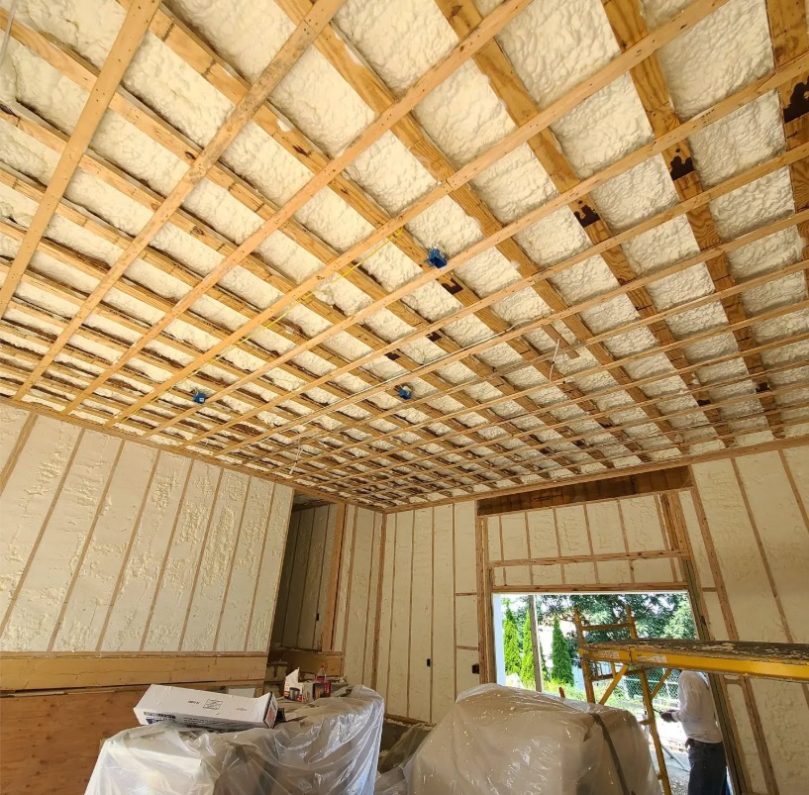
Cold floors in the morning, rooms that never quite hold their heat, and rising heating bills throughout the winter often point to one common issue: air leaks caused by gaps and weak insulation in your home’s structure. Coleman Spray Foam helps Norfolk homeowners solve these problems with professional residential spray foam insulation that seals your home from the inside out. Our expert team uses high-quality open-cell and closed-cell spray foam solutions to improve comfort, reduce energy waste, support healthier indoor air quality, and help lower your environmental impact. Property owners across the Greater Boston area trust us for insulation solutions that make their properties quieter, more comfortable, and more energy-efficient.
Call (781) 730-6537 or email [email protected] for a free quote today.
Spray foam works by expanding the moment it is applied, pushing into the cracks, gaps, and hard-to-reach cavities that ordinary batt insulation leaves exposed. Once it cures, home spray foam insulation forms a continuous air barrier that stops uncontrolled airflow that causes cold rooms, high bills, and uneven temperatures. The result is a tighter building shell that keeps conditioned air inside where it belongs.
That sealed envelope does more than improve comfort. The U.S. Department of Energy estimates that air leakage can account for 25 to 40 percent of the energy used to heat and cool a typical home, so closing those leaks delivers real savings month after month. For anyone weighing spray foam insulation for residential homes, that combination of comfort and lasting efficiency is hard to match with traditional materials.
Choosing spray foam insulation for your home brings a long list of practical rewards that show up in daily life and on your utility bills. The benefits below explain why this material has become the standard for modern, efficient houses.
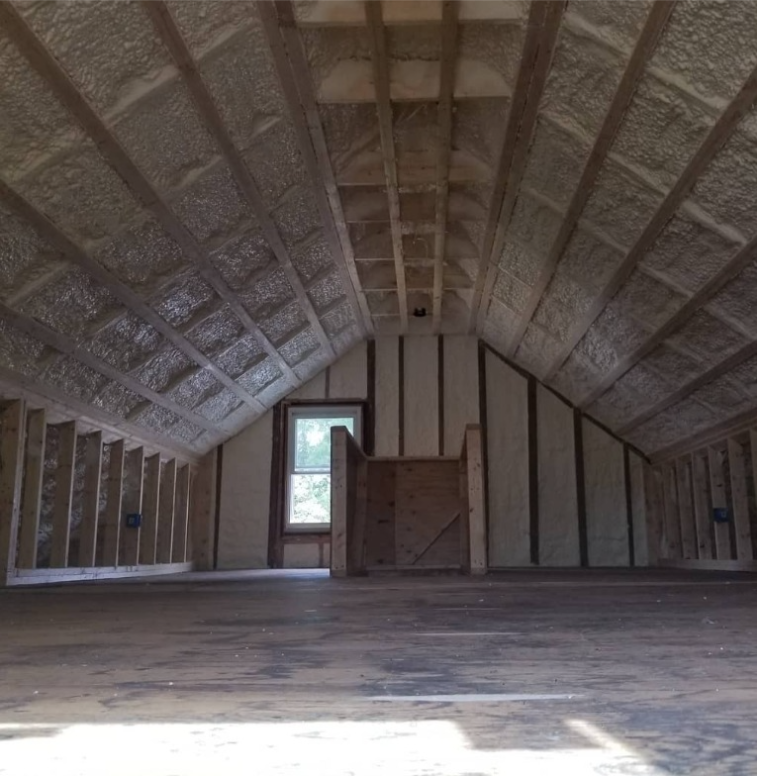
Both foam types create an effective air seal, but they serve different purposes, which is why offering both is important when planning spray foam for houses. Open-cell foam is lighter, softer, and excellent at filling large cavities and dampening sound, while closed-cell foam is denser, adds strength, and resists moisture. The right choice depends on the space, the budget, and the performance you are after.
| Feature | Open-Cell Foam | Closed-Cell Foam |
|---|---|---|
| Density | Light and Soft | Dense and Rigid |
| R-value per inch | Lower | Higher |
| Moisture resistance | Limited | Strong |
| Sound dampening | Excellent | Good |
| Best suited for | Interior walls, ceilings | Basements, crawl spaces, exteriors |
Things to consider: Closed-cell foam usually costs more per inch but delivers a higher R-value and built-in moisture protection, making it the smarter pick for below-grade and exterior areas exposed to damp conditions.
Every house has weak points where air sneaks in and energy slips out, and insulating homes with spray foam targets those areas directly for the fastest return. From the top of the roofline down to the foundation, the foam adapts to the odd framing, pipes, and wiring that other products struggle to cover. The spaces below typically see the greatest improvement in comfort and efficiency.
Treating these areas creates a single connected barrier around the living space, so warm air in winter and cool air in summer stay inside rather than leaking out through forgotten corners.
Every project starts with an on-site evaluation to measure the space, check existing insulation, and recommend the right foam type and thickness for your goals. This upfront assessment keeps the work accurate and the pricing honest, with no surprises once the job begins. Clear communication at this stage is the foundation of dependable residential spray foam services.
On installation day, the foam is sprayed directly onto the target surfaces, where it expands within seconds and cures into a solid, lasting layer. Proper ventilation and safety steps are followed from start to finish, and most homes are completed in a single visit with minimal disruption to your routine. Once cured, the insulation stays firmly in place for decades without settling or needing replacement.
Norfolk sees long, cold winters, humid summers, and the freeze-and-thaw swings typical of eastern Massachusetts, all of which test how well a building holds its conditioned air. Older homes across the county often hide gaps around framing, chimneys, and additions that drive up energy costs and leave rooms uncomfortable. A trusted residential spray foam company addresses those regional realities with sealing solutions matched to how local houses are actually built.
Familiarity with the area's construction styles, attic layouts, and basement conditions makes a real difference in the final result. Property Owners throughout Norfolk get insulation tuned to New England weather rather than a generic fix, which means steadier indoor temperatures and lower bills year-round.
Ready for a warmer, quieter, and more efficient home? Reliable residential spray foam insulation is one call away for properties across Norfolk and surrounding areas, including Newton, Lexington, Concord, Lincoln, Dover, Medfield, Sharon, Sherborn, Needham, and Wellesley.
Call Coleman Spray Foam at (781) 730-6537 or email [email protected] now to schedule your free, no-obligation quote.
Yes. By minimizing air leakage and improving thermal performance, spray foam helps your home retain conditioned air more effectively. This can reduce the frequency and duration of HVAC operation, improving efficiency and potentially extending the system's lifespan.
Open-cell spray foam is a lightweight option that provides excellent air sealing, while closed-cell spray foam offers higher density, moisture resistance, and stronger insulation performance.
Yes, residential spray foam insulation can be installed in existing homes through retrofit insulation projects to improve comfort, efficiency, and overall insulation performance.
Most residential spray foam insulation projects can be completed within a day, depending on the size and the areas being insulated.
Experienced installers evaluate the building envelope, identify hidden air leaks, and apply the correct insulation strategy to maximize long-term energy performance and durability.